

With H5 bird flu now in wild birds in Victoria, owners of aviary birds and backyard chickens should know what to look for. We are still seeing birds at the clinic, but the way you bring one in has changed.
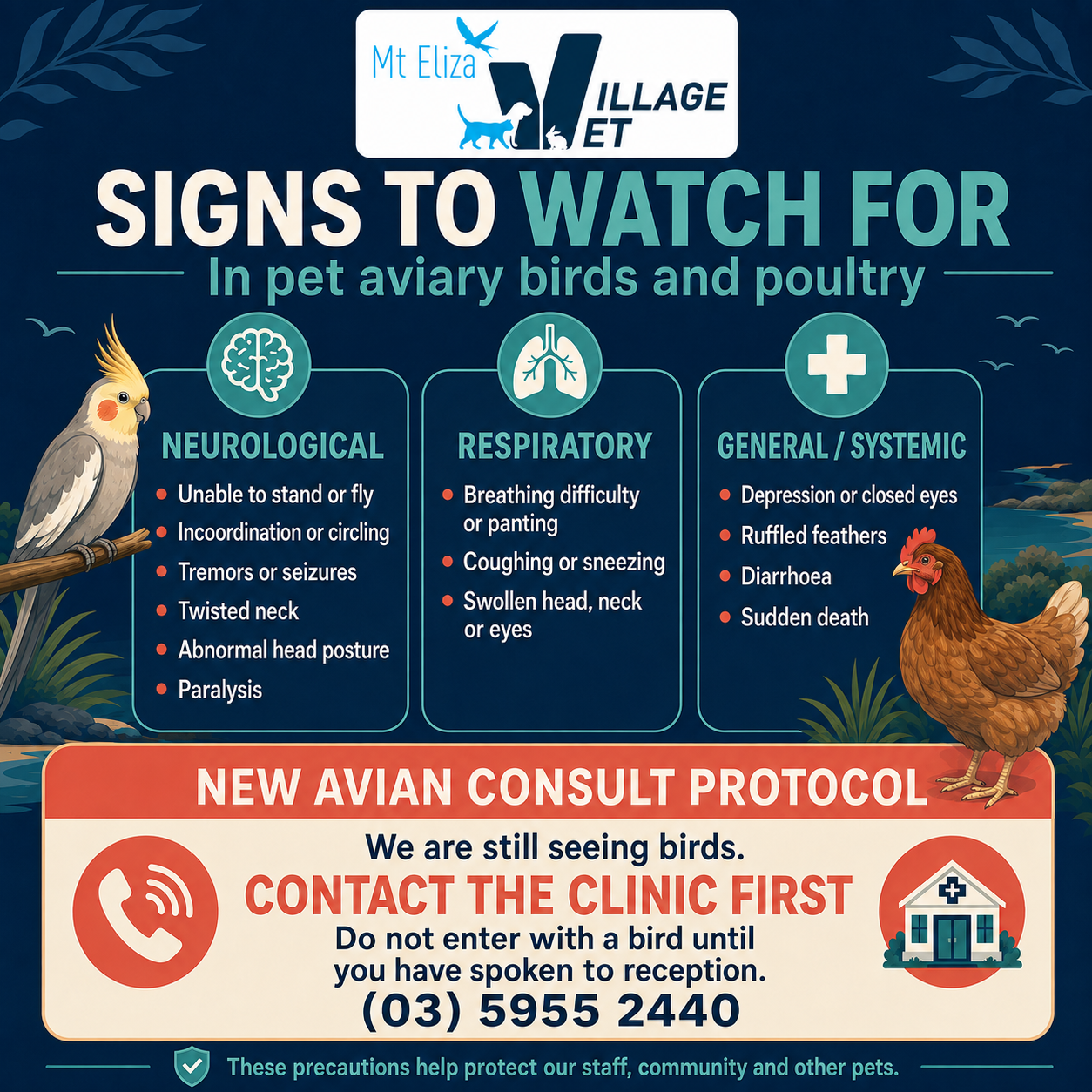
Signs to watch for
Neurological
- Unable to stand or fly
- Incoordination or circling
- Tremors or seizures
- Twisted neck
- Abnormal head posture
- Paralysis
Respiratory
- Breathing difficulty or panting
- Coughing or sneezing
- Swollen head, neck or eyes
General
- Depression or closed eyes
- Ruffled feathers
- Diarrhoea
- Sudden death
Agriculture Victoria says bird flu should be considered if a high proportion of a flock becomes ill very quickly, going from normal to severe illness or death within 24 to 48 hours. In poultry, a rapid drop in feed intake or egg production can also be a sign.
New avian consult protocol
Contact the clinic first. Call (03) 5955 2440 before you come in, and do not enter the building with a bird until you have spoken to reception. Reception will tell you what to do next. These precautions help protect our staff, the community and the other pets in the waiting room.
If you have sick or dead poultry, also call the Emergency Animal Disease Hotline on 1800 675 888.
Keeping your birds away from wild birds
Agriculture Victoria's advice for backyard poultry owners includes:
- Keep feed and water where wild birds cannot reach them
- Keep your birds away from dams, ponds and other water used by wild birds
- Use netting, fencing or roofing to reduce contact with wild birds and their droppings
- Keep aviaries and coops clean, and remove spilled feed, fallen fruit and standing water
- Wear clean footwear and clothing into bird areas, and wash your hands before and after handling birds
If you find a sick or dead wild bird, our earlier post explains how to report it. For other injured wildlife, see our injured wildlife page. If you have questions about your own bird, call us or use the contact page.